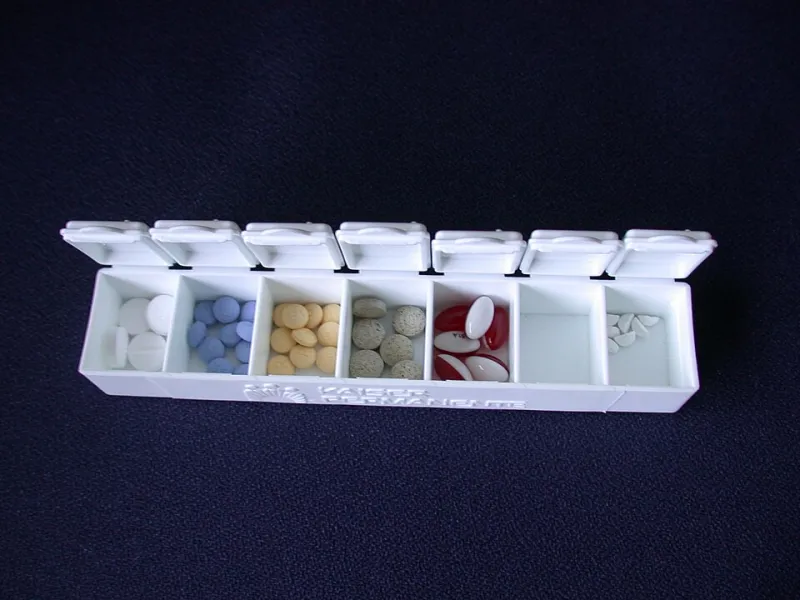
The Near-Twin Question: A 2026 Checklist Before You Swap Your Biologic
Photo: U.S. Navy NMRTC by Emily McCamy, Public domain, via Wikimedia Commons
If your prescription bill has a comma in it, you have probably heard the word “biosimilar” floated like a coupon code. The pitch is simple: a near-twin version of an expensive biologic, often at a lower price. The reality is a little more nuanced. A biosimilar is not a generic, and switching is not a decision to make just because a provincial letter or an insurer’s note lands in your inbox. This is a checklist for the conversation before you swap.
First things first: biosimilars are not generics
A generic drug is a chemical copy of a small-molecule medicine. Biosimilars are different. Biologics are made from living cells, and they are complex, variable, and sensitive to how they are made and handled. A biosimilar is highly similar to an approved biologic, but it is not identical. Health Canada reviews the evidence and approves biosimilars for use, but that does not mean your pharmacist can quietly substitute one at the counter the way they might swap a brand-name tablet for a generic. In most cases, the switch involves your prescriber.
That distinction matters because biologics are often used for conditions where response can be personal: inflammatory arthritis, Crohn’s disease, psoriasis, diabetes, and certain cancers. The question is not just “is this cheaper?” It is “is this the right move for me, and what changes if it is?”
Why provinces keep nudging switches
Provincial drug plans have been looking at biosimilars for years because the savings can be significant. Some provinces have introduced switching policies for certain biologic drugs, meaning patients may need to move to a biosimilar to keep coverage for that class of treatment. Private insurers may follow with their own rules. The goal is to stretch public drug budgets further, and for many patients the switch works out fine.
But a policy nudge is not a clinical mandate written specifically for your body. There can be exceptions, and the process varies by province. If you have a reason to stay on your current biologic, ask your prescriber about the exemption or appeal route rather than assuming you have no options.
The money math: what actually changes
A lower list price for a biosimilar does not always translate into a lower out-of-pocket cost for you. Your final bill depends on your plan’s coverage rules, deductibles, co-insurance, dispensing fees, and whether the pharmacy charges shipping. An online pharmacy may offer a lower cash price, but for biologics you also need to ask about handling, delivery speed, and replacement policy. Cheap plus careless is not a bargain.
If you are paying cash, compare the full landed cost: drug, dispensing fee, cold-chain packaging, delivery, and any follow-up fees. If you have coverage, ask the insurer whether the biosimilar is on the same tier and whether the switch changes your co-pay. Do not compare just the sticker price on the vial.
Questions for your prescriber
Before you agree to a switch, get clear answers on the clinical side. Ask whether the biosimilar is appropriate for your condition and your treatment history. Ask whether you need extra monitoring, such as bloodwork or a follow-up appointment, after the switch. Ask what happens if the new drug does not work as well for you or if you have a reaction. Ask whether the device changes: a pre-filled pen, a syringe, or an infusion can all behave differently. Ask how the switch will be documented for your insurer or provincial plan. And ask what symptoms should prompt a call rather than a wait-and-see approach.
If you are managing a condition that fluctuates, it helps to have a baseline conversation before the swap, not after. Write down your current dose, schedule, and any side effects you already track. That gives you something to compare against.
Questions for your online pharmacy
This is where the “turbo” part needs a reality check. Biologics often need a temperature-controlled supply chain. A fast parcel is only good if it arrives within the right temperature range. Ask how the pharmacy ships refrigerated or temperature-sensitive drugs, what kind of packaging it uses, how long the parcel can safely sit in a mailbox or at a door, and what happens if delivery is delayed. Ask whether the pharmacy provides tracking and a delivery window, and whether it will replace a parcel that arrives warm or damaged.
Ask whether a new prescription is required for the biosimilar or whether the pharmacy can transfer the existing one. Ask what documentation you get for insurance or tax purposes. Ask who you call after hours if the parcel is late or the drug looks wrong. And ask whether refills can be synchronized so you are not chasing separate shipments for different medications.
The logistics of a near-twin
A biosimilar may look almost the same on paper, but the handling rules can still matter. Do not stockpile biologics just because you found a cheaper source. Check expiry dates, storage instructions, and whether the pharmacy’s shipping method matches the drug’s requirements. If you are switching, coordinate the timing so you do not run out while the new prescription is being processed. Fast delivery is helpful, but a gap in treatment is not.
In winter, ask about freeze risk. In summer, ask about heat exposure. If you live in a rural area or a building with a chaotic mailroom, ask about signature requirements and pickup options. The last few feet of delivery can matter as much as the first click.
Red flags worth pushing back on
Be cautious if a pharmacy will not answer basic cold-chain questions, if a switch is presented as mandatory without any explanation of the clinical rationale, or if you are asked to sign a consent form you do not understand. You are allowed to ask for written information and time to think. A legitimate pharmacy should not treat those questions as an inconvenience.
Biosimilars can be a real money-saver, and for plenty of Canadians they are a sensible option. But the switch is a clinical decision with a logistics tail. Ask the near-twin questions, get the answers in writing where it matters, and make sure “fast” does not mean “sloppy.”