The Big-Box Refill Myth: Doing the Real Math on 90-Day Prescriptions in Canada
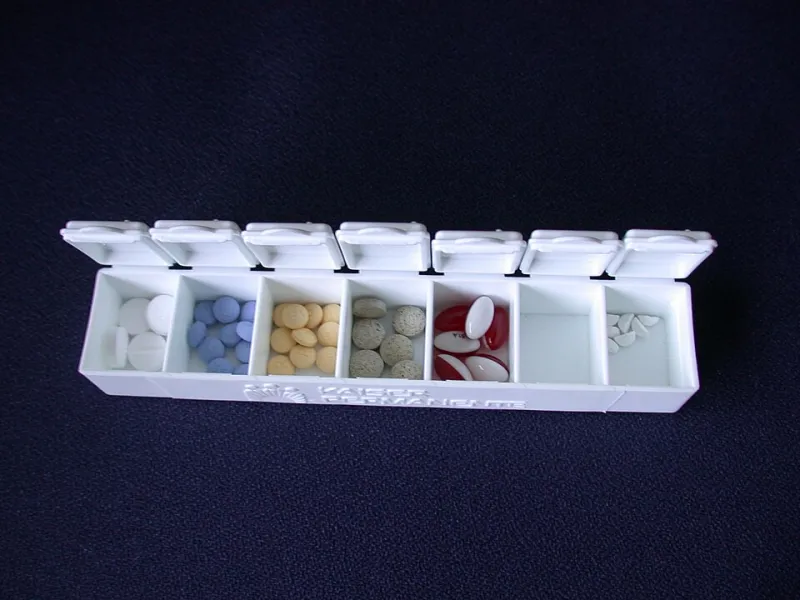
Photo: Dvortygirl, CC BY-SA 3.0, via Wikimedia Commons
There's a comfortable logic to bulk buying: bigger box, better deal. Toilet paper? Usually true. Prescription meds? Sometimes true, sometimes you're just paying three months early for a cabinet full of clutter.
The 90-day supply is one of those quiet decisions that can save real money or quietly waste it. The trick is to stop guessing and run the math on your own prescription, your own plan, and your own kitchen shelf. Here's the practical version.
First, the fee math nobody tapes to the fridge
Most Canadian pharmacy pricing has two moving parts: the drug cost and the dispensing fee. The dispensing fee is charged per fill, not per pill. That's why a 90-day supply often looks good on paper. If your pharmacy charges $12 per fill, twelve 30-day fills cost $144 in fees over a year. Four 90-day fills cost $48. That's $96 back in your pocket before you even look at the drug cost.
But don't stop there. Some insurance plans charge a co-pay per 30-day period no matter how big the fill is. Others charge one co-pay per fill. If your plan is the first kind, a 90-day supply may not save you a cent on co-pays, even if it saves the insurer money. If it's the second kind, the savings can be real. Check your plan's day-supply rule and co-pay structure before you assume the bigger bottle is the smarter bottle.
Your plan may have opinions
Private insurers, provincial drug plans, and employer benefit programs all set their own rules about day supply. Some encourage 90-day fills for stable maintenance meds. Some cap certain drugs at 30 days. Some require a 30-day trial first. And some will pay for 90 days only if the pharmacist submits it a certain way.
This is where a quick phone call or portal check beats a guessing game. Ask three questions: Is a 90-day supply covered for this drug? Is the co-pay charged per fill or per 30 days? Does the plan require any special authorization for a longer supply? The answers can flip the math in a hurry.
The provincial wild card
What's allowed in one province isn't automatically what your plan covers in another. Provincial drug programs, college rules, and pharmacist professional judgment all come into play. A pharmacist might decline a 90-day fill for a new medication, a drug with a narrow therapeutic window, or something with a short expiry. That's not a conspiracy to sell more dispensing fees. It's usually a safety call.
So if you're moving, switching plans, or snowbirding, don't assume your old 90-day routine travels with you. Re-check the rules where you are and where your plan lives.
Storage: your bathroom shelf is not a warehouse
Pills don't love heat, humidity, or light. A 90-day supply can be perfectly fine in a cool, dry cupboard, kept in the original container with the label intact. It can be a bad idea in a steamy bathroom, a glovebox, or a windowsill. Some medications need refrigeration, but only if the label says so. Don't refrigerate everything just because it feels official.
If you use a pill organizer, keep the original bottles for reference and label the organizer clearly. And if kids or pets are in the house, treat the whole supply like what it is: medicine, not candy.
Expiry dates and the clutter tax
The expiry date on your label isn't always the same as the manufacturer's date. Pharmacies often assign a shorter beyond-use date once a medication is dispensed. That matters for bulk buys. If you get 90 days of pills but the pharmacy labels them for 60 days, you've bought clutter, not savings.
Clutter has a cost, too. Expired meds, discontinued drugs, old strengths, and half-used bottles pile up. Most pharmacies will take back unused medications for safe disposal, but they won't refund them. A 90-day supply only makes sense when you're stable on the dose, the expiry is comfortably beyond the supply, and you have a sensible place to store it.
The cash-flow sting
A 90-day fill means paying for three months at once. If money is tight this week, a 30-day fill can be the cheaper choice even with extra dispensing fees, because it spreads the cost out. This is where online pharmacy shopping can help, but only if you're honest about the timing. Turbo-fast delivery gets the meds to your door quickly; it doesn't change the fact that you're paying for three months upfront.
If cash flow is the bottleneck, compare the annual cost, not just the sticker price per fill. Sometimes paying a few more dispensing fees is worth avoiding a credit card balance or a skipped grocery run.
When 90 days wins
A 90-day supply tends to win when you're on a stable maintenance medication, your plan allows it, your dispensing fee is charged per fill, your expiry date is long enough, and you've got a safe, dry place to store it. It's also handy for travel and for people who'd rather not reorder every month.
When it doesn't
Skip the bulk buy when you're starting a new drug, changing doses, tapering, or watching for side effects. Skip it if the pharmacy labels a short expiry, if storage is tricky, or if your plan charges the same co-pay either way. And skip it if paying three months upfront would squeeze your budget. A bigger box is a tool, not a trophy.
A quick test before you click
Run this simple comparison: annual cost equals fills per year times dispensing fee, plus drug cost, plus any shipping. Then check the day-supply coverage, the co-pay structure, the expiry date, and your storage situation. If the 90-day version saves money and fits your life, great. If it just moves clutter from the pharmacy shelf to your kitchen shelf, stick with 30 days and keep the cash flow friendly.
At Canadian Pharmacies Turbo, we're all for discounted Canadian meds and fast delivery. But the best deal is the one that actually works for your prescription, your plan, and your life. Do the math first. The savings are better when they're real.