Your Refill History Is Talking: Who's Listening When You Order Meds Online?
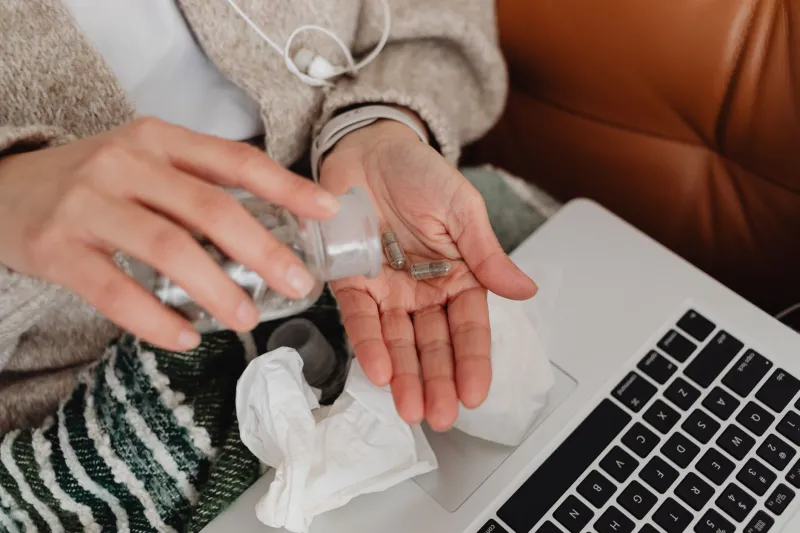
Ordering your prescriptions online has become as routine as topping up your phone plan. A few taps, a discount, and your meds show up at the door in days. But while you're celebrating the speed, your data is moving even faster — and in directions you might not expect.
Every online pharmacy order generates a surprisingly detailed portrait of you: what you take, how often, your doctor's name, your address, sometimes your insurance details. The question isn't whether that information exists. It's who else gets to see it.
What You're Actually Handing Over
Think a prescription order is just a prescription order? Consider what a typical intake form collects:
- Your full name, address, and date of birth
- Your provincial health card number
- A list of every medication you take — current and past
- Your prescriber's contact information
- Payment details, sometimes including insurance policy numbers
Stack that together and you've got something more revealing than a credit report. A refill history can indicate chronic conditions, mental health treatment, fertility journeys, or hormone therapy. That's not just personal — in the wrong hands, it's marketable.
The Law: PIPEDA and What It Actually Covers
Canada isn't the wild west on privacy. The Personal Information Protection and Electronic Documents Act (PIPEDA) sets the ground rules for how private companies — including online pharmacies — can collect, use, and share your information.
The highlights that matter to you:
- Consent must be meaningful. A pharmacy can't bury data-sharing permissions in fine print and call it informed consent.
- Purpose limitation. They can use your info to fill your prescription. Using it to build a marketing profile or sell to third parties requires separate, explicit permission.
- Access rights. You can ask any company what data they hold about you and request corrections.
- Safeguards. PIPEDA requires appropriate security measures — encryption, restricted access, the works.
Provincial health information laws add another layer in many jurisdictions, particularly for anything touching publicly funded healthcare records.
The catch? Enforcement is reactive. PIPEDA complaints often take months or years to resolve, and by then your data may have already changed hands.
Where Speed and Privacy Collide
Here's the tension nobody advertises: turbo-fast service runs on data plumbing. Same-day verification, automatic refill reminders, personalized discount offers — every one of those conveniences requires your information to flow between systems. Prescriber portals, payment processors, courier services, reminder apps.
Legitimate pharmacies minimize what they share at each step. Less scrupulous operations treat every handoff as a monetization opportunity. The difference usually comes down to whether privacy was designed into the process or bolted on as an afterthought.
Red Flags in the Fine Print
Before you upload a prescription anywhere, read the privacy policy — yes, actually read it. Watch for:
- Vague language like "we may share information with trusted partners"
- No named privacy officer or contact for data questions
- Refusal to state where your data is stored (outside Canada means different rules may apply)
- Marketing consent bundled automatically with your order
- No retention policy — how long do they keep your records after you're a customer?
A legitimate Canadian pharmacy will tell you plainly: what they collect, why, how long they keep it, and who to contact if you want it deleted.
Your Five-Minute Pharmacy Privacy Audit
Run any online pharmacy through this checklist before your first order:
- Licence check. Verify the pharmacy is licensed in Canada through your provincial college of pharmacists. If the licence isn't easy to find, that's your answer.
- Real pharmacist access. Can you speak to an actual Canadian-licensed pharmacist? Reputable operations make this obvious.
- Privacy policy specifics. Look for named purposes, retention periods, and a stated commitment to not selling your data.
- Data location. Ask where your information is stored. Canadian storage isn't legally mandatory for everything, but it simplifies your protections.
- Opt-out options. You should be able to order meds without signing up for marketing emails, referral programs, or "partner offers."
- Secure portal, not email. Prescription and health details should travel through encrypted portals, never plain email or chat apps.
What Reputable Pharmacies Should Do With Your History
There's a flip side: your refill data, handled properly, works for you. Good pharmacies use it to flag dangerous drug interactions, sync refills so you don't run out, and catch when you've gone three months without a renewal. That's the benefit side of the data ledger.
The dividing line is purpose. Data used to keep you safely medicated? Reasonable. Data sold to supplement companies who noticed you buy cholesterol meds? Not reasonable, and under PIPEDA, likely not legal without your explicit say-so.
You Have More Power Than You Think
A few moves worth making this week:
- Request a copy of your data from any pharmacy you've used. PIPEDA gives you that right, and the response tells you a lot about how seriously they take it.
- Uncheck marketing boxes during checkout — every time.
- Ask directly: "Do you sell or share customer data with third parties?" A confident, specific answer is a good sign. A runaround is a better one.
- If you suspect a breach or misuse, you can file a complaint with the Office of the Privacy Commissioner of Canada at no cost.
The Bottom Line
Fast shipping and low prices aren't the enemy of privacy — carelessness is. Canadians shouldn't have to choose between a good deal on their medications and control over their most sensitive information. The pharmacies worth your business understand that trust is part of the product.
So the next time a checkout page asks for your health card number, take ninety seconds to scroll past the order summary and find the privacy section. Your future self — the one whose data stayed put — will thank you.