The Two-Address Tango: Why Your Pharmacy Cares Where Your Card Lives

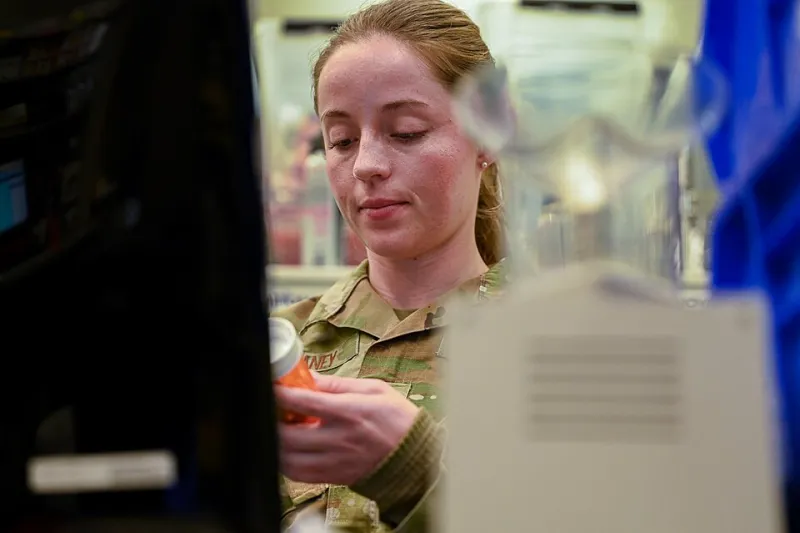
Photo: Tore Billing, Public domain, via Wikimedia Commons
You pay with a card registered in Calgary. The pills need to reach your aunt in Corner Brook. On paper, that is a perfectly normal Canadian prescription order. In a pharmacy's fraud system, it can look like a tiny yellow flag flapping in the breeze — and yellow flags have a way of slowing down even the most turbo-tinged delivery promise.
This is not about making online pharmacies suspicious of every snowbird, student, caregiver or kind neighbour. It is about the unglamorous plumbing behind the parcel: payment verification, chargeback risk, theft prevention and provincial privacy rules. In 2026, the two-address check is one of the most common reasons a prescription order gets held before it ever reaches the shipping label printer.
Why the billing and delivery addresses do not need to match — but often get checked
A pharmacy sees two things at checkout: where the money says it lives, and where the medication is going. Most legitimate orders have matching addresses. Plenty do not. Adult children order for aging parents. Students order from campus while their bank card still carries a home address. Snowbirds bounce between provinces. Caregivers pay for someone else's insulin.
Fraud systems are built around patterns, not personalities. A mismatched address can trigger a manual review because the pharmacy wants to confirm that the person paying is not using a stolen card to ship medications somewhere else. They also want to avoid chargebacks, which are expensive and messy for everyone. And for certain prescription products, extra checks are simply part of the terrain.
The check is not usually personal. It is a handbrake. The problem is that handbrakes feel personal when you are down to the last three tablets and the tracking page still says label created.
Before you hit pay: make the addresses boringly accurate
Speed starts before the checkout button. The easiest way to sail through a two-address check is to make your order look ordinary. That means typing the billing address exactly as your card issuer has it — not the address you actually live at, not the one you are moving to next month, and not the one you use for Amazon because it is close enough.
For delivery, be obsessively complete. Include the unit number, the buzz code, the rural route, the postal code and any Canada Post community mailbox detail that actually helps a courier. Corner Brook and Calgary both have addresses that can get creative; a missing suite number is a classic reason for a parcel to bounce around.
If you are ordering for someone else, say so if the pharmacy offers a notes field. A short line like 'Ordering for my mother; billing address is mine' is not a legal document, but it gives a reviewer context. If you are using a card that belongs to a spouse or adult child, expect the pharmacy to ask for verification. That is normal.
What counts as proof — and where the privacy line sits
When an order is held for address confirmation, pharmacies typically ask for something that ties the payer to the billing address or the recipient to the delivery address. Common requests include a recent bank or credit card statement with most of the card number redacted, a utility bill, a government-issued photo ID, or a short signed note authorising delivery to a different address.
Send only what is asked for. A redacted statement showing your name and address is usually enough. You do not need to send your Social Insurance Number, your full credit card number, your provincial health card number or a scan of your entire life history. If a pharmacy asks for something that feels excessive, ask why they need it and whether a redacted version will do.
Use the pharmacy's secure upload portal if they have one. Avoid emailing unredacted documents. If you must email, cover or crop anything unrelated to the address check. A little caution here is not paranoia; it is just good postal-code hygiene.
When the order gets held: the calm, non-turbo response
First, check your junk folder. Address verification emails love to hide there. Then look at the order status page before you fire off a second order in frustration. Duplicate orders are a great way to create a genuine mess.
Reply within the pharmacy's stated window. Keep it short: order number, what they asked for, and the document attached. If the request is unclear, ask a direct question. 'Can you confirm whether a redacted credit card statement is enough, or do you need a utility bill?' is better than a paragraph of worry.
If you call, have your order number ready. Ask three things: what is missing, how long the review usually takes, and whether your place in the shipping queue is preserved once the hold clears. A turbo-fast pharmacy should be able to give you a straight answer about the handbrake, even if the answer is not instant.
The turbo-speed reality check
Fast shipping is only fast once the order is released. A two-address check is not a sign that your pharmacy is slow; it is a sign that someone is actually looking at the order. The trick is to make the review quick by being accurate at checkout, responsive when asked, and stingy with personal information.
So if your card says Calgary and your parcel is headed for Corner Brook, go ahead and order. Just expect the pharmacy to do a little double-take. Bring the right paperwork, keep your patience handy and remember: a five-minute verification now beats a parcel that spends three days in administrative purgatory later.